

The soft room trend isn’t really about furniture. It’s about being tired, and wanting one room in the house that asks nothing of you. Curved sofas, tactile fabrics and lamps instead of a glaring ceiling light are the visible bits. The point is a living room that feels restorative rather than impressive. A lot of what’s said about it is wrong, so here are the common myths, one at a time.
Myth: the soft room trend is just a bouclé sofa
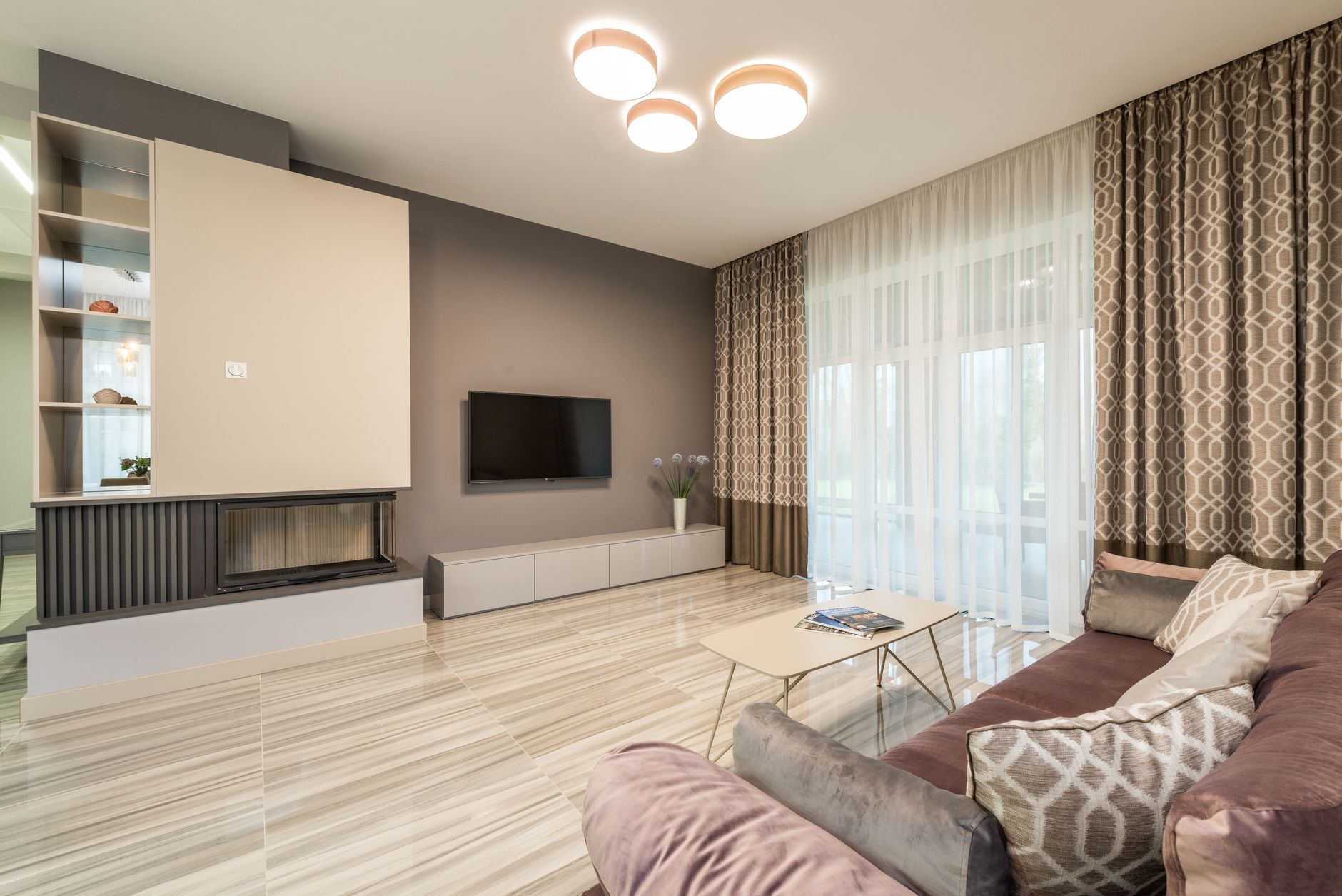
Bouclé got the headlines, but the sofa is the least important part. A soft room works by removing hard visual stops: a rounded armchair, a pebble-shaped coffee table, an arched mirror, a rug without a busy pattern. Fewer corners and fewer contrasts mean the room reads as calmer at a glance.
That makes it a design principle, not a product. A secondhand armchair with a rounded back, a wool throw and a round side table can do the same job as a new sofa costing four figures. If you’re buying one thing, buy the piece you sit in most, and choose it for how it feels under your hand, not how it photographs.
Does low lighting just make a room gloomy?
No. Done properly, low lighting makes a room feel warmer rather than darker, because the trick is lowering the height and the glare of the light, not removing it. A single ceiling pendant throws light down and flattens everything. Two or three lamps at different heights, with warm white bulbs (often labelled 2700K) and ideally a dimmer, give pools of light that make a room feel enclosed and soft.
This matters more in November. The clocks went back on 25 October, and it’s properly dark by late afternoon, so your lamps are doing most of the work between now and spring. The NHS sleep guidance leans on a relaxing wind-down before bed, and dimmer, warmer evening light fits neatly with that. LED bulbs cost little to run, so a lamp-led room isn’t a heating-bill problem either.
Myth: soft means expensive
Texture is the cheap part. Wool, linen, cotton and velvet throws, cushion covers and curtains do far more for the feel of a room than one statement piece. Curved furniture turns up regularly on secondhand sites and in charity shops, because rounded armchairs and tables have been made for decades. Buy the shape you like, then reupholster or cover it.
If the look you’re after is understated rather than plush, our guide to quiet luxury home décor covers the budget end of the same palette. And if you rent and can’t touch the walls, these ideas for renters work almost entirely through lamps, rugs and fabric.
Myth: it’s only a home thing
Calm design has spread well beyond the living room. Community groups, drop-in centres and charities increasingly set up quiet rooms and softer waiting areas, because people arriving stressed respond to them. If you volunteer for or run a charity doing this, the same logic applies online. A cluttered, shouty website undoes the calm you’ve built in the room, and a specialist in Activism Digital is one place to look for a site that welcomes people in the same way.
Myth: soft rooms are messy, cosy chaos
The opposite is true. Layering texture only works with restraint. A soft room usually sticks to two or three tones, often warm neutrals, clay, oatmeal or a muted green, so that the interest comes from the fabrics rather than from colour. Pile on five patterns and four metals and you get a jumble, not a sanctuary.
It also isn’t minimalism by another name. If you want to own less, our piece on the British move towards owning less stuff is a good companion. A soft room can hold plenty of things, as long as they have a place and nothing is shouting for attention.
Why so many people want this now
I’d argue the appeal is simple. Most of us spend our days looking at bright screens, in open-plan offices or on loud, fast-moving high streets. Come home to a room built from hard edges and overhead light and you’re still switched on. The soft room trend is a reaction to that: a deliberate low-stimulation space you can walk into at six o’clock in November and exhale in. Nobody needs a design movement to explain wanting that, but it helps to have a name for it.
How to try a soft room this weekend
- Turn off the main ceiling light for a week and use only lamps. Move one lamp lower, to a side table or the floor.
- Swap cold white bulbs for warm white ones, and add a plug-in dimmer if you can.
- Put one large textured item on the biggest hard surface: a wool rug, a heavy linen curtain or a thick throw on the sofa.
- Remove one sharp-edged item from the centre of the room, such as a glass-topped coffee table, and replace it with something round, even if it’s a stool or a pouffe.
- Cut the colour palette down to two or three tones by boxing up the loudest cushions.
Start with the lighting, since it costs the least and changes the room the most. Live with it for a week before you spend anything on furniture.
Frequently Asked Questions
What is a soft room in interior design?
A soft room is a space designed to feel calm and restorative. It uses curved furniture, tactile fabrics such as wool, linen and velvet, a muted palette and low, warm lighting from lamps rather than a bright ceiling light.
What colours work best in a soft room?
Warm neutrals work best: oatmeal, cream, stone, clay, soft greys and muted greens. Keep to two or three tones so the texture of the fabrics carries the interest, instead of loud colour or patterns.
What kind of light bulb should I use for low lighting?
Choose warm white LED bulbs, often labelled around 2700K, ideally dimmable. They give a soft, yellowish glow rather than a cold, bright one, and LEDs cost very little to run compared with older bulbs.



Leave a Reply