Category: Society

  • Bookshop Tourism Is Britain’s Coolest New Travel Trend, Here’s Where to Go

    Bookshop Tourism Is Britain’s Coolest New Travel Trend, Here’s Where to Go

    People are planning entire weekends around a bookshop. Not a festival, not a restaurant with a three-month waiting list, a bookshop. Bookshop tourism UK is genuinely one of the most interesting travel shifts I’ve noticed recently, and I say that as someone who spent last autumn driving to Hay-on-Wye specifically to spend four hours in a building full of second-hand paperbacks. No regrets whatsoever.

    The numbers back this up. The Booksellers Association reported that independent bookshop numbers in the UK grew for the fifth consecutive year in 2025, with over 1,000 indie shops now trading. These aren’t just shops, they’ve become cultural destinations in their own right, with reading groups, author events, curated shelving that feels almost editorial, and the kind of considered atmosphere you simply cannot manufacture online. People are travelling for that feeling.

    Interior of a British independent bookshop with floor-to-ceiling shelves — bookshop tourism UK
    Photo by Beyzaa Yurtkuran on Pexels

    Why bookshop tourism took off in the first place

    Part of it is the broader shift towards buying preloved and independent that’s been reshaping British consumer behaviour for a few years now. Part of it is the slow-travel mood, more people wanting experiences that feel deliberate and unhurried rather than ticking off landmarks at speed. And part of it is genuinely aesthetic: independent bookshops photograph beautifully, they have personality, and they give you something to talk about.

    The high street angle is real too. Whilst big retail chains have continued to retreat from town centres, independent bookshops have moved into the spaces with purpose. Tools like TownCentre.app, a free UK app for town centres and high streets across England, help shops reach customers without the overhead of expensive platforms, local independent booksellers can take card payments, list their events, and sell for free to people in the area who are already browsing what’s on the high street. That kind of infrastructure genuinely makes a difference to whether a small shop survives long enough to become a destination.

    England’s unmissable bookshop destinations

    Hay-on-Wye, Herefordshire, technically sitting on the Wales/England border, but worth flagging for both sides. It has roughly 25 bookshops for a population of around 1,500. Richard Booth’s Bookshop is the anchor, a rambling castle of a building with a cinema inside it. The whole town is essentially one long bookshop crawl, and the annual Hay Festival (held each May/June) draws serious literary figures from across the world. I’d allow at least a full day, ideally two.

    Wigtown, Dumfries and Galloway, Scotland’s official National Book Town, with around 12 independent bookshops serving a village of 900 people. The star is The Book Shop, owned by Shaun Bythell whose diaries about running it became cult reading during lockdown. Wigtown Book Festival each September is the main event, but the town rewards a visit any time of year.

    Much Wenlock, Shropshire, quieter, less well-known, and all the better for it. Wenlock Books is a genuinely lovely independent that punches well above its size in terms of curation and events programming. The town itself is achingly pretty, which doesn’t hurt.

    Alnwick, Northumberland, Barter Books occupies a Victorian railway station and is one of the largest second-hand bookshops in Europe. There are open fires, a model railway running along the tops of the shelves, and a café. On a grey Northumberland morning, there is nowhere I’d rather be.

    Second-hand books on shelves in a converted Victorian railway station bookshop, a classic bookshop tourism UK stop
    Photo by Mark Thomas on Pexels

    Stroud, Gloucestershire, the Cotswold town that quietly became one of the most creatively interesting places in England. Sub Rooms bookshop and the town’s wider independent retail scene make it worth the trip, and the Saturday market adds to the atmosphere considerably.

    Wales: Hay is just the beginning

    Beyond Hay-on-Wye, Wales has a handful of genuinely outstanding bookshop experiences. Tŷ Newydd, the National Writing Centre of Wales near Pwllheli on the Llŷn Peninsula, isn’t a bookshop exactly but sits at the intersection of literary tourism in a way that feels relevant. For actual shopping, Aardvark Books in Brampton (near the Welsh border) and the cluster of shops in Aberystwyth make that part of the country a legitimate bookshop tourism circuit on its own.

    Scotland’s literary geography

    Beyond Wigtown, Scotland rewards proper bookshop tourism planning. Edinburgh is an obvious anchor, Lighthouse Books on West Nicholson Street is a radical, community-run indie that’s been building a seriously loyal following. Typewronger Books on Leith Walk has a typewriter repair shop attached, which tells you everything about the vibe. For something more countryside-pace, Callander in the Trossachs has a lovely indie that makes a good stop on any route north.

    The UK high street revival story has a distinctly literary chapter, and Scotland is writing a lot of it. The Scottish Government’s funding for book towns and literary tourism infrastructure has given independent booksellers in smaller communities a genuine reason to stay open and invest.

    How to plan a bookshop tourism trip properly

    The Booksellers Association’s bookshop finder is genuinely the best place to start, you can filter by region and find independents you’d never stumble across otherwise. Most serious bookshop tourism is built around 2-3 anchor destinations with supporting stops on the route between them.

    Ring ahead if you’re visiting somewhere very small. Wigtown shops, for example, sometimes keep irregular hours outside of festival season. The same goes for some of the more remote Scottish shops. A quick call saves a wasted journey.

    Budget for more than you think. I’ve never left a good independent bookshop spending less than I planned, and I’ve stopped trying to fight that particular battle. It’s money well spent, and the shops genuinely need it. Apps like TownCentre.app mean that more high street shops, including bookshops across England, can now reach customers before they even leave home, helping people discover what’s worth visiting in a given town before they arrive. For shopping and browsing, that kind of local discovery tool changes how a day out works.

    The bookshop tourism UK trend doesn’t look like slowing down. If anything, as people continue to prioritise experiences that feel meaningful and a bit slower, the atmospheric independent bookshop is exactly the kind of place that fits the moment. The books are almost secondary to the feeling of the place, almost.


  • How British Gen Z Is Quietly Reinventing What a Night Out Looks Like

    How British Gen Z Is Quietly Reinventing What a Night Out Looks Like

    Something has quietly shifted in the UK’s after-dark economy. Not with a bang, not with a manifesto, just with a growing number of twentysomethings choosing experiences that don’t end with a kebab and a hangover. The sober social scene UK has been building momentum for a few years now, and in 2026 it’s gone from niche to genuinely mainstream. I’ve been watching this change happen in real time, and honestly? It makes complete sense.

    Alcohol consumption among 16 to 24-year-olds in Britain has been falling for over a decade, according to ONS health surveys. But what’s changed recently isn’t just the drinking stats, it’s what people are actually doing instead. Younger adults aren’t staying home. They’re just choosing very differently.

    Young adults enjoying a supper club dinner as part of the UK sober social scene
    Photo by Any Lane on Pexels

    The pub isn’t dead, but it’s not the default anymore

    Let’s be clear: British pub culture hasn’t collapsed. The local still has its place, and there’s nothing wrong with a Friday pint. But for a significant chunk of Gen Z, the pub is one option among many rather than the obvious starting point for a social life. The shift is less about rejecting pubs and more about recognising that the entire category of “going out” has expanded.

    Cost plays a part. A round in London now regularly clears £30 for four people, and that’s before anyone’s had dinner. But it’s not just money. There’s something bigger happening culturally. Gen Z came of age during lockdowns, when community was rebuilt through interest-led groups rather than proximity to a bar. That habit stuck. They found their people around shared passions, and they want their social life to reflect that.

    What sober socials actually look like in 2026

    The term “sober social” used to sound like a support group. It doesn’t anymore. In cities like Manchester, Bristol, Edinburgh and London, sober socials now mean anything from silent disco yoga to immersive art evenings, craft workshops, book swaps with natural wine alternatives, or just intentionally designed spaces where drinking isn’t the point.

    Club Söda, one of the UK’s longest-running sober lifestyle networks, has seen its event attendance more than double since 2022. Their nights out feel nothing like abstinence; they feel like someone finally designed a social event around the experience rather than the booze. I went to one in Hackney last spring and the energy was genuinely better than most bars I’ve been in, louder, more present, better conversations.

    Singing bowls at a late-night wellness event, part of the growing sober social scene UK
    Photo by Tahir Xəlfəquliyev on Pexels

    Then there’s the late-night wellness angle. Sound baths, breathwork sessions and cold-water recovery events are being scheduled at 9pm on a Friday deliberately, to catch people who want that communal night-out feeling without the alcohol. Some venues even offer floatation or light therapy sessions as part of a social package. Providers like healthpodonline.co.uk are part of a wider ecosystem of wellness experiences that are finding their footing in exactly this gap in the market, the hours when young adults used to default to nightclubs.

    Cultural supper clubs are filling the gap brilliantly

    Perhaps the most interesting development is the supper club explosion. These aren’t formal dining events for older crowds, they’re scrappy, intimate, often run out of someone’s home or a borrowed kitchen, and they’re explicitly social in design. They use food as the anchor but community as the point. You go to meet people, to eat something that tells a story, to have a conversation that lasts three hours.

    There’s a brilliant one in Birmingham called Dine Different that brings together 20 strangers every fortnight around a rotating cuisine theme. In Leeds, a Somali-British chef named Fadumo runs monthly supper clubs from a community kitchen that sell out within hours. These aren’t restaurants with extra steps, they’re something genuinely new, and they’re pulling people who would previously have spent Saturday night queueing outside a club.

    The connection to the new wave of British food culture is obvious. Food has become a legitimate cultural event in Britain, and younger people are treating a good supper club the way a previous generation might have treated a gig.

    Why this generation is leading the change

    Gen Z gets a lot of unfair criticism for being online and antisocial. From what I can see, the opposite is true. They’re among the most intentional social generalists going, they just want their time to mean something. The difficulty of building genuine adult friendships is something a lot of people talk about, and structured social events like supper clubs and sober nights out are a direct response to that. They lower the awkwardness, give you a reason to be there beyond booze, and create shared experience quickly.

    Mental health awareness plays into it too. The relationship between heavy drinking and anxiety is well understood now in a way it wasn’t even ten years ago, and Gen Z isn’t shy about prioritising their mental state over social convention. Skipping the Friday session because you’ve got a sound bath on Saturday isn’t weird anymore. Among certain crowds, it’s the cooler choice.

    What this means for the high street and beyond

    The economics of this shift are worth watching. UK nightclub numbers have dropped significantly since 2005, and while pubs have held steadier, venue operators who depend on alcohol revenues are having to rethink. The ones adapting fastest are turning evenings into experiences rather than just drinking occasions. It’s not dissimilar to the way the high street has had to reinvent itself around experience rather than just retail, same pressure, same solution.

    The good news for anyone running events or venues is that Gen Z is absolutely willing to spend money on a good night. They’re just spending it on tickets, food, workshops and experiences rather than rounds. A £35 supper club ticket feels like better value than £35 in drinks, and the memory lasts longer too.

    Britain’s nightlife is shifting, but it’s not shrinking. It’s getting more varied, more intentional, and in a lot of ways more interesting. Whether that’s a lasting cultural change or just a generational blip is still to be seen, but right now, the sober social scene UK has real momentum. And for the first time in a while, going out feels like it has something to offer everyone.

    Frequently Asked Questions

    What is a sober social and how is it different from a regular night out?

    A sober social is any organised social event where alcohol isn’t the focus or may not be available at all. Unlike a regular pub or club night, the event is designed around an experience, a workshop, supper club, wellness activity or cultural event, with socialising built in naturally rather than mediated by drinking.

    Are sober socials popular across the UK or just in London?

    They’ve spread well beyond London. Manchester, Bristol, Edinburgh, Birmingham and Leeds all have active sober social scenes in 2026, ranging from community supper clubs to late-night yoga events. The format works in smaller cities too, often organised through local community groups or social media.

    How much does a sober social event typically cost in the UK?

    Prices vary widely. A workshop or wellness event might run from £10 to £30, while a supper club evening typically costs between £30 and £55 including food. Most people find the total spend comparable to or less than a conventional night out once you factor in drinks, entry fees and transport.

    Is the trend away from clubbing permanent or just a Gen Z phase?

    ONS data shows alcohol consumption among young adults in the UK has been declining consistently for over a decade, so there’s a structural shift rather than a passing trend at play. Whether specific formats like supper clubs remain popular is harder to predict, but the move towards experience-led socialising looks durable.

    How do I find sober social events near me in the UK?

    Club Söda and Eventbrite both list sober and low-alcohol events across the UK. Local Facebook groups, Meetup.com and Instagram are also reliable for finding community supper clubs and wellness nights in most cities. Searching for ‘mindful drinking events’ or ‘sober curious’ alongside your city tends to surface active local scenes.

  • Why British People Are Finally Taking Annual Leave Seriously (And What Changed)

    Why British People Are Finally Taking Annual Leave Seriously (And What Changed)

    There was a time, not even that long ago, when burning through your full holiday entitlement was almost seen as a character flaw in British workplaces. You’d hear it framed as dedication: “Oh, I haven’t taken a proper break in three years” delivered with the faint pride of someone announcing they’d run a marathon on no sleep. The martyrdom was the point. I’ve watched friends rack up a fortnight’s worth of unused days by December, then scramble to book them before the financial year closed, too exhausted to actually enjoy the time off.

    That era feels genuinely over. Annual leave culture UK has shifted in ways that even the most sceptical HR departments are scrambling to understand.

    Woman relaxing in a park, reflecting the shift in annual leave culture UK
    Photo by Quang Nguyen Vinh on Pexels

    The numbers that tell the story

    The change isn’t anecdotal. A statutory minimum of 28 days has been in place for years, yet for a long time a significant portion of UK workers left an average of 5 to 6 days unused per year. Post-2023, that figure has tightened considerably. CIPD data from 2025 shows that employees across sectors are claiming more of what they’re owed, and the reasoning has changed fundamentally. It’s not just about having somewhere to go. It’s about having somewhere to recover.

    Burnout became a word people actually used about themselves rather than others. The pandemic compressed years of productivity anxiety into a short window, and when things reopened, a lot of people emerged from the experience genuinely depleted. The body keeps score and so, eventually, does the savings account when someone exits a job they should have left two years earlier.

    Why rest stopped being a dirty word

    Something cracked in the collective mindset around 2023. You could feel it on social media first, as you always do. The “hustle culture” aesthetic that dominated the late 2010s started getting openly mocked. TikTok was full of thirty-somethings talking about burnout as if they’d personally survived something. “Lazy girl job” discourse, the “slow living” movement, the steady rise of what some called quiet quitting (though that term always felt overloaded), all of it pointed in the same direction: workers, particularly younger ones, had stopped buying the idea that overwork was inherently virtuous.

    British workers occupy a specific cultural position here. We’ve historically worked longer hours than many of our European counterparts, with a particularly complicated relationship to the concept of leisure. There’s a residual Protestant work ethic baked into the culture, the idea that rest needs to be earned rather than taken as a given. What’s shifted is the source of that permission. People aren’t waiting for a manager to tell them it’s alright to log off. They’re taking the leave and explaining the decision afterwards, if at all.

    How employers actually responded

    Plenty of companies made noise about wellbeing without changing the structural conditions that made leave feel impossible to take. You know the type: a “wellness Wednesday” email alongside a 6pm all-hands meeting. But a real shift happened in mid-sized businesses especially, where the talent retention crisis made ignoring burnout genuinely costly. Replacing an experienced hire isn’t cheap. Losing one to preventable exhaustion is worse.

    Some companies moved to unlimited annual leave policies, though the evidence on those is complicated. Without a baseline, people sometimes take less, not more, because there’s no floor to anchor expectations. The more effective intervention seems to have been simpler: managers who actively encouraged direct reports to book leave early in the year and treated rest as part of performance, not separate from it.

    The four-day week trials across the UK produced results interesting enough that several organisations made the change permanent. The logic is essentially the same: productivity doesn’t scale linearly with hours, and a rested person does better work than an exhausted one grinding through a Friday afternoon.

    The connection to how we spend time off

    What people do with leave has changed too, and this connects to broader shifts in how British culture relates to spending and experience. The secondhand and preloved economy has made leisure more affordable for people who previously felt holidays were financially out of reach. A staycation in a rented cottage near the Peaks feels more legitimate than it did five years ago, when the cultural script around “proper” holidays leaned heavily toward international travel.

    There’s also something happening with how people use leave beyond the classic two-week summer block. Mental health days, long weekends built around a bank holiday, taking individual days mid-week to decompress after a heavy period. The monolithic “summer holiday” is less the only model now. I’d argue that fragmented leave, taken deliberately and regularly, is actually better for recovery than saving it all for August and spending the first five days of it anxious about the inbox you left behind.

    The social dimension matters here too. Research consistently shows that isolation compounds burnout. People taking proper breaks are re-engaging with friendships and communities that had atrophied during long work stretches. The UK friendship crisis is real and well-documented, but time off is one of the few structural levers individuals actually control.

    What this looks like day to day

    My take is that the most meaningful version of this shift isn’t the big gestures. It’s the person who used to apologise for booking a week in October now just… booking the week. No lengthy explanation in the Slack message, no reassurance to colleagues that they’ll be available if anything urgent comes up. The psychological permission to rest without justification is, arguably, the real change.

    There’s a cultural ripple here too. The high street revival that’s been gathering pace across British towns is partly driven by people who are actually present in their communities on weekday afternoons, taking leave and spending it locally rather than being perpetually at a desk. Leave that gets used has economic consequences beyond the individual.

    Annual leave culture UK isn’t fully fixed. There are still industries and workplaces where the old pressures dominate: hospitality, some parts of the NHS, retail during peak periods. But the direction of travel is clearer than it’s been in a generation. Rest is having its reputation restored. Gradually, and with some resistance from the corners of corporate Britain that still equate visibility with value, but it’s happening.

    Taking your leave isn’t slacking. It’s paying attention to what keeps you functional for the long run. That the UK is slowly learning to treat it that way feels, honestly, overdue.

  • Secondhand Everything: How British Consumers Turned Preloved Into the Default, Not the Alternative

    Secondhand Everything: How British Consumers Turned Preloved Into the Default, Not the Alternative

    Something shifted, and it happened fast. The secondhand shopping UK trend used to carry a certain stigma, charity shops were for skint students, car boot sales were a Sunday morning curiosity, and anything described as “preloved” made people quietly wince. Now? Buying new feels almost naive. The resale market in the UK was worth an estimated £6.5 billion in 2025 according to Statista UK, and every signal points upward. This is not a blip. It’s a cultural reset.

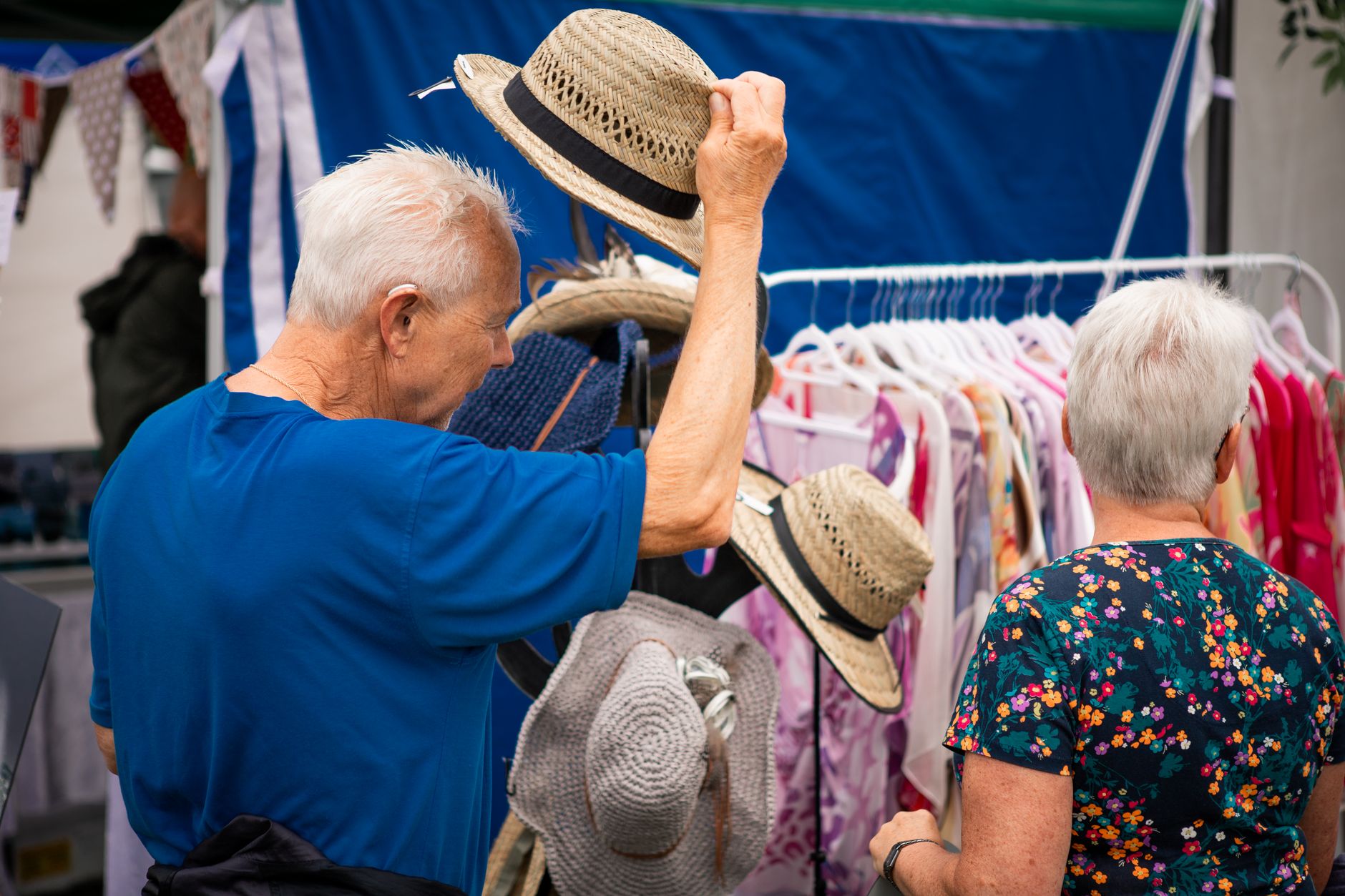
    Shoppers browsing preloved clothing at a vintage market, reflecting the secondhand shopping UK trend
    Photo by Immanuel MacCarthy on Pexels

    I’ve watched this happen in real time. A few years back, telling someone you’d bought your sofa on Facebook Marketplace got a polite smile and a subtle subject change. Now that same conversation gets you asked what you paid, where you found it, and whether the seller has anything else listed. The frame has flipped entirely. Secondhand is not the budget option you settle for. For a growing number of British shoppers, it’s simply the smart choice.

    Fashion: where the shift really started

    Vinted gets most of the headlines, and fair enough, the platform has over 20 million registered users in the UK and genuinely changed how people think about clearing out a wardrobe. But the resale fashion scene has gone well beyond a Lithuanian app where you can offload last season’s Zara. Depop built a whole aesthetic identity around secondhand streetwear, particularly for Gen Z buyers in cities like Manchester, Bristol, and Glasgow who want pieces that feel individual rather than just cheap.

    Charity shops have quietly upgraded too. Oxfam’s specialist vintage shops, the Cancer Research boutiques doing curation rather than bin-bag dumping, and the rise of pop-up preloved markets in old warehouses and car parks have all contributed to a new kind of thrifting that feels curated rather than desperate. The revival happening on the British high street is partly being powered by exactly this kind of independent, preloved retail taking up space that chains vacated.

    What’s interesting is who’s buying. It’s not only younger shoppers hunting a bargain. There’s a meaningful slice of the market in their thirties and forties spending serious money on vintage pieces, a 1990s Ralph Lauren shirt, a deadstock pair of New Balance 990s, a Barbour wax jacket with genuine wear on it, precisely because those items hold quality that mass-production doesn’t replicate anymore.

    Furniture: the real glow-up

    Furniture is where the secondhand shopping UK trend has had its most visible cultural moment. For a while, mid-century modern everything dominated Instagram feeds, and people started realising the only way to get a genuinely solid teak sideboard or a proper Parker Knoll armchair was to go secondhand. IKEA flat-packs simply aren’t the same.

    Facebook Marketplace has become the dominant force here in a way that surprises people who still think of it as a fringe operation. For large furniture, a dining table, a wardrobe, a corner sofa, it’s where deals get done, because the logistics of local collection make it far more practical than shipping. Preloved platforms like Vinterior have added a more curated layer, focusing on vintage and antique pieces for buyers who want quality assurance alongside the hunt. And if you live near any city with a decent antiques quarter (think Alfie’s in London, the Custard Factory in Birmingham, or the Cloth Market area of Newcastle), you’ll know those spaces are busier than they’ve been in years.

    If you’re trying to pull off a genuinely considered home aesthetic on a realistic budget, the advice I’d give is to skip the high-street homeware shops entirely for statement pieces and go straight to Marketplace or a local auction house. It takes more patience, but the results are usually better. There’s something about living with quiet luxury home pieces that actually have history to them, they feel grounded in a way that brand-new never quite does.

    Tech: refurbished goes respectable

    Consumer electronics took longer to shake the stigma, partly because buying a secondhand phone or laptop felt riskier. You couldn’t always verify what you were getting. That’s changed substantially. Back Market has built a proper business out of certified refurbished tech, offering warranties and graded condition reports on everything from iPhones to MacBooks to gaming consoles. John Lewis started stocking some refurbished devices. Apple itself sells certified refurbished hardware through its own site.

    The numbers make a compelling case. A refurbished iPhone 14 Pro runs roughly £300 to £400 less than a new model of equivalent spec. For buyers who don’t need the absolute latest features, that gap is hard to ignore. And with the right grade-A certification and a 12-month warranty behind it, the perceived risk effectively disappears.

    Cars: the secondhand default has always been here

    Buying a used car has always been the default for most British drivers, but the platforms and the process have transformed. AutoTrader, Cazoo, and the newer Cinch have professionalised what used to feel like a gamble into something closer to a structured retail experience, with video walkarounds, home delivery, and money-back windows. Private sellers listing on Facebook Marketplace have also taken a significant chunk of volume from the traditional forecourt.

    The electric vehicle secondhand market is particularly interesting right now. Early-adopter EVs from three or four years ago are hitting the resale market with battery health still well within acceptable ranges, but at prices that make electric motoring genuinely accessible. That’s a significant shift from even two years ago when EV depreciation anxiety kept many buyers nervous about secondhand electric cars.

    The communities making it stick

    Beyond the platforms, there’s a social layer that rarely gets credit. WhatsApp groups dedicated to local preloved furniture. Reddit communities like r/frugalUK where people share resale finds and negotiating tips. The real-world communities forming around car boot sales, vintage fairs, and swap events in town halls and community centres up and down the country. Buying secondhand has become a shared activity, a conversation starter, something people bond over, not just a solitary transaction driven by necessity.

    The other driver is values, plain and simple. The disposability of fast fashion and cheap furniture has become genuinely unfashionable in a way it wasn’t even five years ago. Buying preloved is better for the planet, and people know it. That knowledge has moved from the head to the gut, from something you’d say in a survey to something that actually shapes behaviour at the point of purchase.

    The secondhand shopping UK trend isn’t fringe, it isn’t niche, and it isn’t temporary. It’s just shopping now. And honestly, I think that’s one of the more genuinely positive things British consumer culture has done in a long while.

    Frequently Asked Questions

    What are the best platforms for secondhand shopping in the UK?

    It depends on what you’re buying. Vinted and Depop lead for fashion, Facebook Marketplace dominates furniture and homewares, and Back Market or Apple Certified Refurbished are solid for tech. For cars, AutoTrader, Cazoo, and Cinch all offer structured used vehicle buying with consumer protections.

    Is buying secondhand tech in the UK safe?

    Buying from reputable refurbished retailers like Back Market or through Apple’s official refurbished store comes with warranties and graded condition reports, which significantly reduces risk. Always check whether you’re getting a warranty of at least 12 months and confirm the device is unlocked and not reported stolen.

    How big is the UK secondhand market?

    Statista UK estimates the resale market was worth around £6.5 billion in 2025, spanning fashion, furniture, tech, and vehicles. The sector has grown consistently year on year as both cost-of-living pressures and environmental awareness push more consumers toward preloved goods.

    Is secondhand furniture worth buying, and where should I look?

    For solid, quality pieces, particularly vintage or mid-century furniture, secondhand is often better than buying new at an equivalent price point. Facebook Marketplace is the most active platform for local furniture deals, while Vinterior focuses on curated vintage and antique pieces with seller vetting.

  • The UK Friendship Crisis Nobody Wants to Admit To, And What People Are Actually Doing About It

    The UK Friendship Crisis Nobody Wants to Admit To, And What People Are Actually Doing About It

    There’s a particular kind of loneliness that hits differently when you’re in your thirties, forties, or beyond. Not the dramatic, cinematic loneliness of a breakup or a bereavement, but a slow, creeping realisation that your social circle has quietly shrunk to almost nothing, and that you genuinely have no idea how to rebuild it. Making friends as an adult in the UK is, frankly, something most of us find mortifying to admit we’re struggling with. And yet, according to the ONS, around 3.83 million adults in England feel lonely “often” or “always”. That number has only climbed since the pandemic reshuffled where we work, where we live, and who we bother keeping in touch with.

    The problem is structural. School gives you friends by proximity. University does too. Then your mid-twenties hit, you move cities for work, start working from home, maybe have kids, and suddenly the scaffolding is gone. Nobody built you a replacement system, and somewhere along the line it became deeply uncool to admit you need one.

    Two adults having a genuine conversation over coffee, reflecting the challenge of making friends as an adult in the UK
    Photo by Mike Jones on Pexels

    Why adult friendships quietly disappear in Britain

    British culture doesn’t help. We are, as a nation, professionally awkward about emotional need. Admitting you’re lonely feels like admitting failure, as if everyone else is out there laughing over bottomless brunch with their tight-knit crew. They’re not. I’ve spoken to enough people in their thirties and forties to know that the majority of them are quietly in the same boat, just too proud to say it out loud.

    Remote working has accelerated things dramatically. When a significant chunk of the workforce clocks on from a spare bedroom in Swindon or a kitchen table in Leeds, the casual collisions that used to turn into friendships, a shared moan about the coffee machine, a Friday pint that became a tradition, just don’t happen. Bumping into people takes effort now. Effort that, after a long day, nobody’s got spare.

    Add to that the fact that many people moved to new towns or cities during the pandemic years, chasing cheaper rent or more space, and found themselves in places where they know essentially nobody. Starting from scratch in your thirties is its own specific nightmare.

    The new social formats Brits are actually trying

    Here’s the thing though: something is shifting. Quietly, slightly awkwardly, and very British about it, people are starting to try stuff. And some of it is genuinely working.

    Friendship apps

    Bumble BFF has been around for a while but has seen a noticeable surge in UK uptake over the past couple of years. It works essentially like the dating version, swipe, match, chat, but without the romantic pressure. I’d be lying if I said the idea didn’t feel a bit strange the first time I heard it. But talking to people who’ve used it, the barrier to entry is exactly what makes it work: everyone on there has already admitted they’re looking for new friends, so the awkwardness is pre-acknowledged and out of the way.

    There are also newer, more niche platforms like Friended and Yubo, designed for slightly different demographics, though the UK adoption is patchier outside London. The apps work best, it seems, when they funnel people towards a shared activity rather than just a chat. Which brings us to the next thing.

    Community dinners and supper clubs

    Communal eating as a social antidote is genuinely having a moment right now. Across cities like Manchester, Bristol, Edinburgh, and Glasgow, community supper clubs are popping up where strangers book a ticket, sit at long shared tables, and eat together. The format works because it removes the one-to-one pressure: you’re not responsible for carrying an entire conversation, the food gives you something to talk about, and the atmosphere is usually relaxed enough that it doesn’t feel like a speed-dating event with pasta.

    Some of these are ticketed events at independent restaurants, some are run by community organisations, and a few are just people opening their homes to strangers, which sounds terrifying and also, by all accounts, brilliant. The high street is adapting to this too; as I explored in how Britain’s high street is quietly reinventing itself, more independent spaces are leaning into community programming rather than just retail, hosting regular events that give people a reason to come back and actually talk to each other.

    Sports and hobby groups

    Running clubs have absolutely exploded. Parkrun, obviously, has been doing this for years, 5km on a Saturday morning, free, welcoming, genuinely one of the better social inventions of the last decade. But beyond that, local running groups, cycling clubs, wild swimming communities, amateur five-a-side leagues, board game cafés, climbing gyms, all of them are reporting packed sign-up lists. The reason is obvious in retrospect: shared activity takes the pressure off conversation. You’re bonded by what you’re doing, not by having to be interesting.

    Craft and creative workshops have surged similarly. Pottery classes in particular seem to have become the go-to for the thirty-something professional who wants to be around other humans without it feeling like networking.

    Making friends as an adult UK: what the research actually says works

    Psychologist Robin Dunbar’s research on friendship suggests that turning an acquaintance into a genuine friend requires around 50 hours of time together, and a close friend needs closer to 200. That’s a lot of pottery. The point isn’t discouraging; it’s clarifying. Friendship takes repetition. A one-off event rarely does it. What works is recurring contact: the running group you show up to every Tuesday, the supper club you book monthly, the neighbour you wave at every morning until one day you’re having a coffee together.

    The formats that seem to convert best are the ones that have a built-in return. Not “come once and see how it goes” but “same time next week”. That rhythm is what school and work used to provide automatically. Now we have to build it deliberately.

    The social design of where we live matters too

    Some of this is an environmental problem. New-build housing estates with no pub, no café, no shared green space make community nearly impossible. I’d argue the physical design of where we live shapes our social lives more than we like to admit. There’s a reason people romanticise terraced houses and tight urban streets, the proximity enforces contact. Cul-de-sacs and car-first developments do the opposite.

    Interestingly, some people are finding that investing in their home environment helps them host more, which in turn creates the space for friendships to develop. The quiet luxury interiors trend I wrote about when looking at how to create an elevated home aesthetic on a budget has a social dimension to it: creating a home you actually want to have people round to is, for some, the first step towards doing exactly that.

    Dropping the embarrassment around it

    My honest take? The biggest barrier isn’t the apps or the formats or even the time. It’s the embarrassment. Admitting you’re lonely, admitting you’d like more friends, admitting you don’t know how to do that as a 38-year-old, none of it feels cool. But pretending otherwise is lonelier.

    The Brits doing best at this in 2026 are the ones who’ve quietly decided they don’t care how it looks. They downloaded the app, they booked the supper club ticket, they walked into the running group alone. It’s awkward for about twenty minutes and then, usually, it isn’t. That’s not a revelation. But sometimes stating the obvious is the most useful thing.

    Frequently Asked Questions

    Why is making friends as an adult in the UK so difficult?

    Adult friendships lack the built-in structure that school and university provide. Once people move cities, work from home, or have children, those casual daily collisions that turn acquaintances into friends simply stop happening. British reserve around admitting loneliness also makes it harder to reach out in the first place.

    What apps can help you make friends as an adult in the UK?

    Bumble BFF is the most widely used in the UK, operating like its dating counterpart but specifically for platonic friendships. Friended is another option, particularly popular with younger adults. Both work best when they lead to a recurring activity or group rather than just one-to-one messaging.

    Are community supper clubs and social dinners actually a good way to meet people?

    They work well for a lot of people because the shared meal format removes the pressure of carrying a one-to-one conversation. Many UK cities now have organised supper clubs with ticketed events, Bristol, Manchester, Edinburgh, and London all have active scenes. Look for events with long shared tables rather than couples-style seating.

  • How Britain Fell Back in Love With the High Street, Just Not in the Way Anyone Expected

    How Britain Fell Back in Love With the High Street, Just Not in the Way Anyone Expected

    For years, the story went like this: high streets were dying, big retail was killing everything, and town centres were turning into ghost towns full of empty shopfronts and charity shops selling paperbacks. I grew up hearing this. Most of us did. And honestly, for a long stretch there, the doom-mongers had a point.

    But something shifted. And the uk high street revival 2026 looks nothing like what the think-tanks were predicting back in the early 2020s. No anchor department stores riding to the rescue. No government scheme that fixed everything overnight. What actually happened is stranger, messier, and genuinely more interesting than any of that.

    Independent shops on a British high street showing the uk high street revival in action
    Photo by Mohan Nannapaneni on Pexels

    The decline narrative that stopped being accurate

    The Office for National Statistics has tracked retail vacancy rates for years, and the picture that emerged through 2024 and into 2025 was surprisingly mixed. While major chains kept downsizing, the category of independent and micro-business retail started moving in the other direction. Not dramatically. Not in every town. But enough to make the blanket “high streets are finished” line feel lazy.

    Walk through Margate, Hastings, Stroud, or Hebden Bridge right now and you’ll see it: record shops, ceramics studios, vintage dealers, speciality coffee spots, zero-waste grocers. Places that did not exist five years ago. Landlords who spent a decade waiting for another Topshop to materialise finally started offering shorter leases and lower rents to get anyone through the door, and a generation of small business owners took the opening.

    The irony is that the death of big retail created the conditions for something more interesting to grow.

    Pop-up culture became permanent culture

    Pop-up shops used to feel like a gimmick. A brand would take over an empty unit for three weeks, build a lot of Instagram-friendly installations, then vanish. Fun, but ultimately disposable.

    What I’ve noticed more recently is that the pop-up has matured into something more substantial. Markets and rotating residencies have become genuine anchors in some town centres. Boxpark opened in Croydon years ago and the model has since inspired dozens of container-unit and kiosk-based concepts across the country. Meanwhile, councils from Bristol to Leeds have backed market halls that give independent food and retail traders a foothold without the terrifying commitment of a full commercial lease.

    For younger people especially, popping to a market hall on a Saturday has replaced the department store Saturday of previous generations. The experience matters more than the transaction. You’re not just buying a candle; you’re talking to the person who made it.

    Community-led spaces are doing the heavy lifting

    Some of the most significant changes on British high streets have nothing to do with retail at all. Community ownership schemes, funded partly through the Community Ownership Fund, have let local groups buy up pubs, libraries, post offices, and town-centre buildings that were at risk of closure or conversion. These spaces become hubs: part venue, part co-working space, part social glue.

    In Frome, Somerset, the model of community-oriented independent business has been running long enough that it’s basically become the town’s identity. In Todmorden, the intersection of community food growing and independent retail has turned a fairly overlooked market town into somewhere people actively seek out. These aren’t anomalies; they’re templates that other places are watching closely.

    The narrative of terminal decline assumed that retail was the only reason to go into a town centre. Strip it out, and there’s nothing left. That assumption turned out to be wrong. People will go where there’s life, purpose, and something to actually do.

    How this connects to wider shifts in how we live

    The post-pandemic reality of more people working from home, at least part of the week, changed the geography of how Britain spends its time and money. Commuter towns and smaller urban centres absorbed footfall that used to flow exclusively into city centres. Local high streets that had felt redundant suddenly had potential customers walking past them at 11am on a Tuesday.

    Independent cafés and local food shops were often the first to benefit. Then came the broader wave of people wanting their immediate neighbourhood to feel like somewhere, to have character, to reward a short walk. There’s a real aesthetic dimension to this too: the same generation obsessing over considered home interiors (the kind of slow, intentional approach covered brilliantly by pieces on quiet luxury home décor) is also the generation choosing the independent bookshop over Amazon and the local deli over a supermarket meal deal.

    Values and aesthetics are travelling together. That’s not a coincidence.

    What this revival actually looks like on the ground

    I want to be honest: this isn’t a uniform story. Plenty of high streets are still struggling badly. The gap between a place that has caught the wave and one that hasn’t is often uncomfortably stark. Blackpool, Grimsby, and parts of the West Midlands face structural challenges that a few artisan coffee shops cannot fix on their own. The UK high street revival is real, but it is uneven.

    The towns and areas seeing genuine momentum tend to share a few things. Relatively affordable rents that let independent businesses survive their first two years. A local population with some disposable income and an appetite for something different. And crucially, councils and landlords who stopped waiting for the old retail model to come back and started actually working with the new one.

    Local Business Improvement Districts, which pool resources from businesses in a defined area to fund shared improvements, have also played a quiet but significant role. They’re not glamorous, but the evidence suggests they help retain businesses in areas where they’d otherwise drift away.

    The vibe has changed and the stats are starting to agree

    My read on this is straightforward: the UK high street revival in 2026 is happening because the culture changed, and the economics eventually followed. Young British consumers are genuinely more interested in provenance, locality, and personality than the generation before them. They’d rather spend £18 on a candle from the ceramicist two streets over than £12 on the same candle from a chain.

    That shift in consumer values, combined with the accidental opportunity created by falling rents and shorter leases, created a window. The independent businesses, community spaces, and pop-up operators who climbed through that window are now the most interesting thing happening in British retail. The old story about high streets ending never really accounted for the possibility that they might just become something different. And different, as it turns out, works.