

Something has shifted. Not dramatically, not with a manifesto or a viral hashtag, just quietly and steadily, in the background of everyday British life. People are buying less stuff. Not because they can’t afford it (though that’s part of it), and not because they’ve watched a documentary about a tidy Japanese apartment. It’s more considered than that. The minimalism UK buy less 2026 conversation has moved on from aesthetic mood boards and capsule wardrobe guides. This time, it’s practical, personal, and a bit harder to reduce to a Pinterest board.
Why now? The conditions that made ‘less’ feel like the obvious answer
British homes have been getting smaller for decades. The average new-build in England is now among the smallest in Europe, according to data from the Office for National Statistics. Combine that with rental costs that have made it financially impossible for millions of people under 40 to own the homes they live in, and the idea of accumulating furniture, gadgets, and décor just starts to feel absurd. You’re paying £1,400 a month for a one-bed flat in a northern city centre. You are not buying a second sofa.
Then there’s the digital layer. Screens, notifications, subscriptions, apps that nudge you to buy, return, and buy again. I’ve spoken to people who describe a kind of low-grade exhaustion from the sheer volume of consumer decisions they face every day. The move toward owning less is, for many, a direct response to that noise. It’s not minimalism as lifestyle branding. It’s minimalism as self-defence.
How this is different from the decluttering wave
The mid-2010s brought us the decluttering moment: charity shop donation bags, the KonMari method, satisfying videos of wardrobes being emptied. People got rid of things they already owned. That felt good, and it was good, but it didn’t necessarily change the behaviour that created the clutter in the first place. A lot of those newly empty shelves filled up again within eighteen months.
What’s happening now is upstream from decluttering. It’s about not acquiring in the first place. Choosing not to buy the thing, even when you could technically afford it. I’d argue that’s a meaningfully different psychological move. It’s not about tidying up the past; it’s about being more intentional about the future. The question isn’t “does this spark joy?” It’s “do I actually need to own this at all?”
That shift connects to some genuinely interesting behavioural changes. The surge in buy nothing groups across Britain is one signal. People borrowing a power drill for one Saturday afternoon rather than buying one that will sit in a cupboard for four years. Sharing, gifting, borrowing, and swapping have become the default for a growing number of people who’d previously have just clicked ‘add to basket’ without thinking.
Small homes, high costs, and the maths that makes fewer things logical
There’s a very simple economic argument running underneath all of this. When storage space is expensive (because square footage is expensive), every object you own has a hidden cost. A flat in Leeds or Bristol or Edinburgh doesn’t have a loft, a garage, or a utility room. Stuff has nowhere to go. So people are starting to treat physical objects more like subscriptions: worth it only if you’re actively using them, not just vaguely intending to.
Cost of living has also sharpened people’s sense of what they’re actually spending. When energy bills, food, and rent take up a larger proportion of income, discretionary spending gets scrutinised differently. I’ve noticed more people around me talking not about what they want to buy, but what they’ve decided not to buy, and doing so with something close to pride. There’s a social currency in restraint that didn’t really exist five years ago.
This tracks alongside a broader pattern of spending shifting from things to time and experience. People who used to browse homeware are now spending on communal experiences or short breaks rather than objects. The value of an experience doesn’t sit in your flat taking up floor space and gathering dust.
What intentional minimalism actually looks like in practice
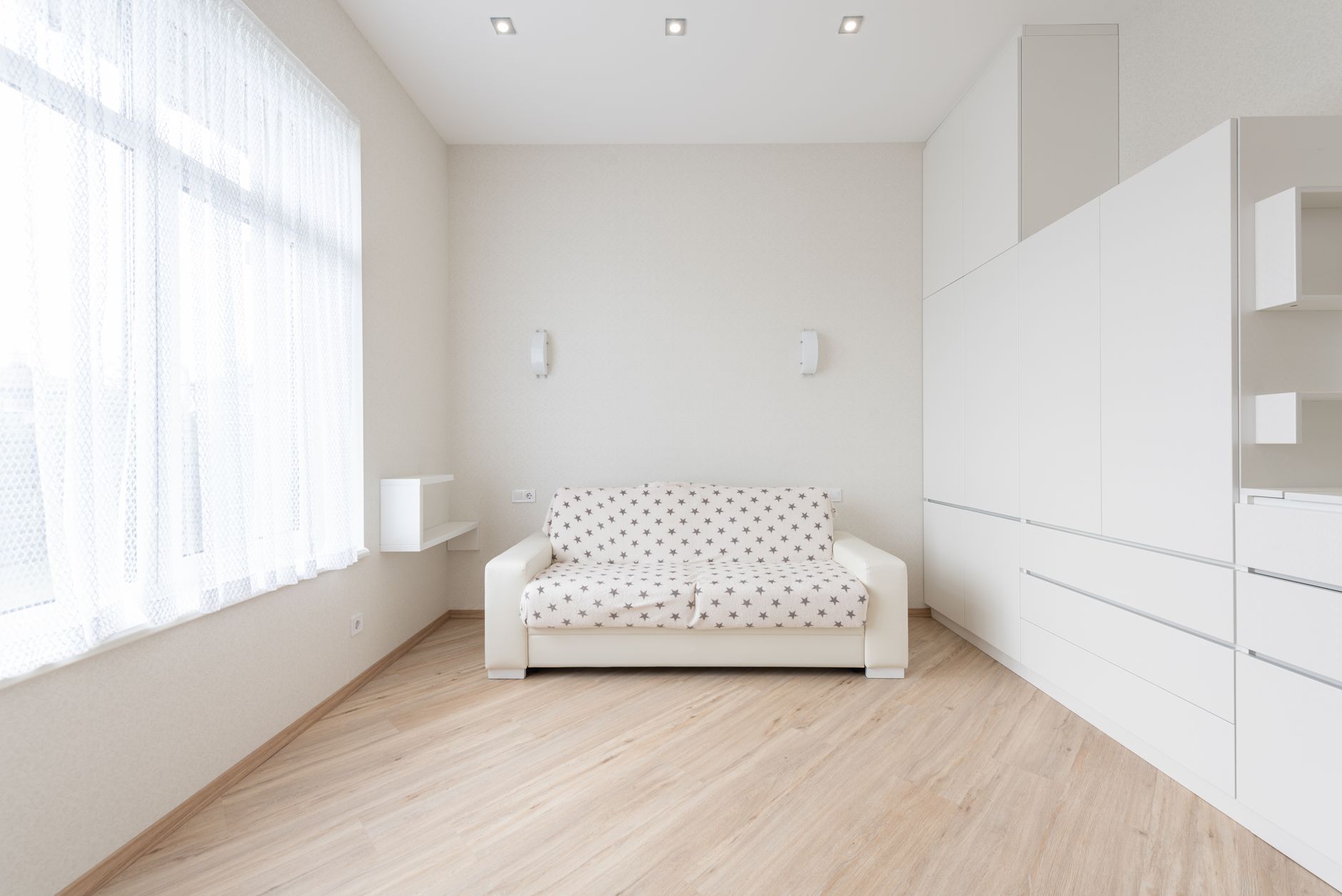
It doesn’t look like bare white rooms with one plant and a linen throw, though those rooms do exist and fair enough. For most people doing this, it looks more like a 48-hour rule before any non-essential purchase. Or a one-in-one-out policy for clothes. Or the decision to rent or borrow tools, camping gear, and party supplies rather than buying them once and storing them indefinitely.
It also looks like secondhand by default. Not secondhand as a budget fallback, but as the first choice. The preloved market has matured enough in Britain that you can furnish a flat, dress well, and kit out a kitchen without setting foot in a retail shop. For people genuinely trying to own less, buying secondhand also acts as a mild friction point, a small pause between wanting something and getting it, which is often enough to reveal that you didn’t really need it anyway.
There’s also a growing disillusionment with the idea that new products are better. British consumers are increasingly aware that independent brands built around quality and longevity often outlast and outperform mass-produced alternatives bought in volume. Buying one good thing rather than three mediocre ones is its own version of owning less.
The point nobody’s saying out loud
Minimalism as an aesthetic has always had a class problem in Britain. Choosing to own less is very different from having less forced upon you. A minimalist flat can look identical to a flat where someone genuinely can’t afford to fill the shelves. The movement gets uncomfortable when it starts feeling like people with options are romanticising constraint.
The version worth paying attention to isn’t the one on interior design accounts. It’s the version that’s happening quietly, practically, and without any particular performance attached to it. People recalibrating what they want from their homes, their time, and their money, and landing on less as the answer, not because it’s trendy, but because it makes sense. That’s a different thing entirely. And it’s not going away.
Leave a Reply