Category: Features

  • The UK Friendship Crisis Nobody Wants to Admit To, And What People Are Actually Doing About It

    The UK Friendship Crisis Nobody Wants to Admit To, And What People Are Actually Doing About It

    There’s a particular kind of loneliness that hits differently when you’re in your thirties, forties, or beyond. Not the dramatic, cinematic loneliness of a breakup or a bereavement, but a slow, creeping realisation that your social circle has quietly shrunk to almost nothing, and that you genuinely have no idea how to rebuild it. Making friends as an adult in the UK is, frankly, something most of us find mortifying to admit we’re struggling with. And yet, according to the ONS, around 3.83 million adults in England feel lonely “often” or “always”. That number has only climbed since the pandemic reshuffled where we work, where we live, and who we bother keeping in touch with.

    The problem is structural. School gives you friends by proximity. University does too. Then your mid-twenties hit, you move cities for work, start working from home, maybe have kids, and suddenly the scaffolding is gone. Nobody built you a replacement system, and somewhere along the line it became deeply uncool to admit you need one.

    Two adults having a genuine conversation over coffee, reflecting the challenge of making friends as an adult in the UK
    Photo by Mike Jones on Pexels

    Why adult friendships quietly disappear in Britain

    British culture doesn’t help. We are, as a nation, professionally awkward about emotional need. Admitting you’re lonely feels like admitting failure, as if everyone else is out there laughing over bottomless brunch with their tight-knit crew. They’re not. I’ve spoken to enough people in their thirties and forties to know that the majority of them are quietly in the same boat, just too proud to say it out loud.

    Remote working has accelerated things dramatically. When a significant chunk of the workforce clocks on from a spare bedroom in Swindon or a kitchen table in Leeds, the casual collisions that used to turn into friendships, a shared moan about the coffee machine, a Friday pint that became a tradition, just don’t happen. Bumping into people takes effort now. Effort that, after a long day, nobody’s got spare.

    Add to that the fact that many people moved to new towns or cities during the pandemic years, chasing cheaper rent or more space, and found themselves in places where they know essentially nobody. Starting from scratch in your thirties is its own specific nightmare.

    The new social formats Brits are actually trying

    Here’s the thing though: something is shifting. Quietly, slightly awkwardly, and very British about it, people are starting to try stuff. And some of it is genuinely working.

    Friendship apps

    Bumble BFF has been around for a while but has seen a noticeable surge in UK uptake over the past couple of years. It works essentially like the dating version, swipe, match, chat, but without the romantic pressure. I’d be lying if I said the idea didn’t feel a bit strange the first time I heard it. But talking to people who’ve used it, the barrier to entry is exactly what makes it work: everyone on there has already admitted they’re looking for new friends, so the awkwardness is pre-acknowledged and out of the way.

    There are also newer, more niche platforms like Friended and Yubo, designed for slightly different demographics, though the UK adoption is patchier outside London. The apps work best, it seems, when they funnel people towards a shared activity rather than just a chat. Which brings us to the next thing.

    Community dinners and supper clubs

    Communal eating as a social antidote is genuinely having a moment right now. Across cities like Manchester, Bristol, Edinburgh, and Glasgow, community supper clubs are popping up where strangers book a ticket, sit at long shared tables, and eat together. The format works because it removes the one-to-one pressure: you’re not responsible for carrying an entire conversation, the food gives you something to talk about, and the atmosphere is usually relaxed enough that it doesn’t feel like a speed-dating event with pasta.

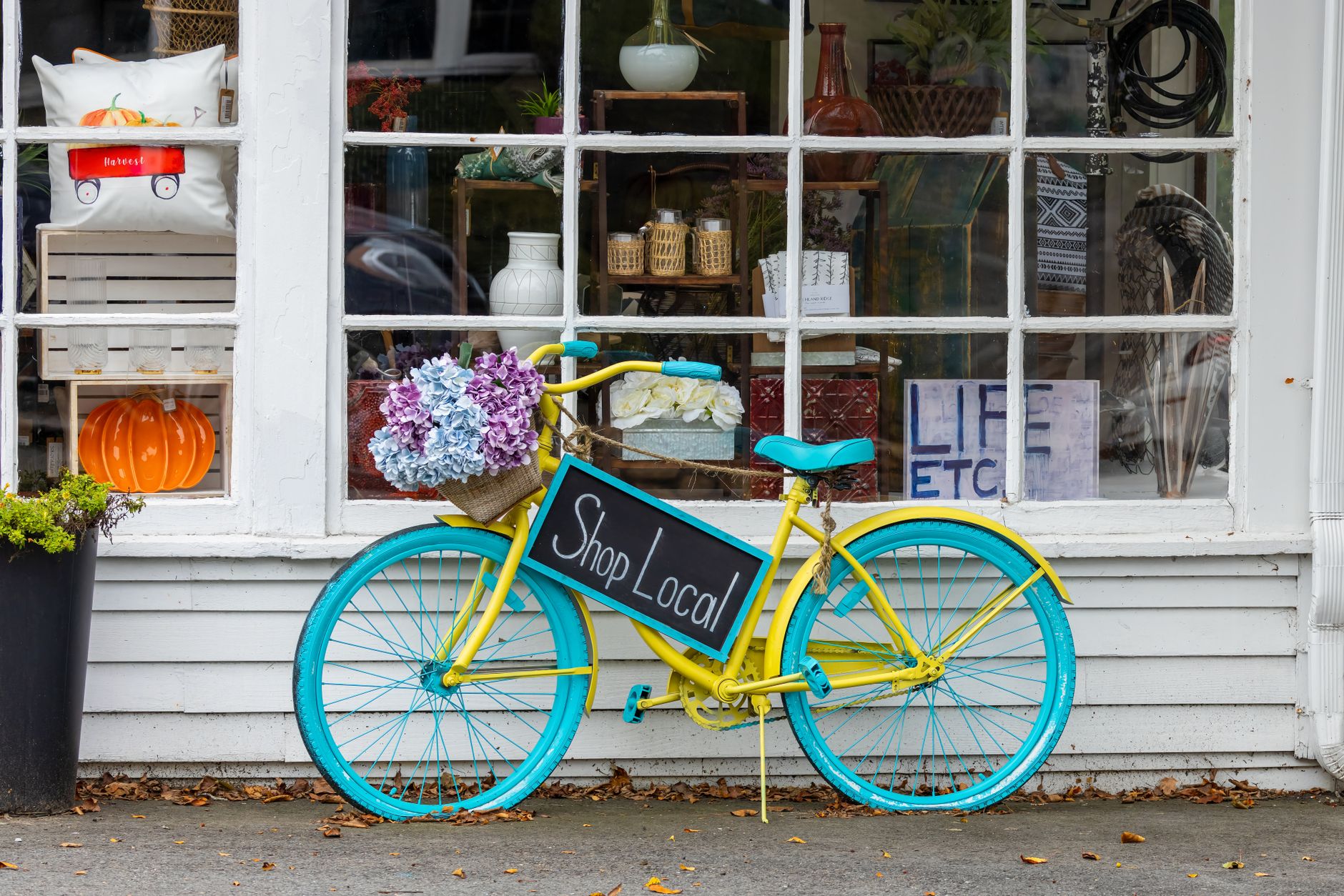
    Some of these are ticketed events at independent restaurants, some are run by community organisations, and a few are just people opening their homes to strangers, which sounds terrifying and also, by all accounts, brilliant. The high street is adapting to this too; as I explored in how Britain’s high street is quietly reinventing itself, more independent spaces are leaning into community programming rather than just retail, hosting regular events that give people a reason to come back and actually talk to each other.

    Sports and hobby groups

    Running clubs have absolutely exploded. Parkrun, obviously, has been doing this for years, 5km on a Saturday morning, free, welcoming, genuinely one of the better social inventions of the last decade. But beyond that, local running groups, cycling clubs, wild swimming communities, amateur five-a-side leagues, board game cafés, climbing gyms, all of them are reporting packed sign-up lists. The reason is obvious in retrospect: shared activity takes the pressure off conversation. You’re bonded by what you’re doing, not by having to be interesting.

    Craft and creative workshops have surged similarly. Pottery classes in particular seem to have become the go-to for the thirty-something professional who wants to be around other humans without it feeling like networking.

    Making friends as an adult UK: what the research actually says works

    Psychologist Robin Dunbar’s research on friendship suggests that turning an acquaintance into a genuine friend requires around 50 hours of time together, and a close friend needs closer to 200. That’s a lot of pottery. The point isn’t discouraging; it’s clarifying. Friendship takes repetition. A one-off event rarely does it. What works is recurring contact: the running group you show up to every Tuesday, the supper club you book monthly, the neighbour you wave at every morning until one day you’re having a coffee together.

    The formats that seem to convert best are the ones that have a built-in return. Not “come once and see how it goes” but “same time next week”. That rhythm is what school and work used to provide automatically. Now we have to build it deliberately.

    The social design of where we live matters too

    Some of this is an environmental problem. New-build housing estates with no pub, no café, no shared green space make community nearly impossible. I’d argue the physical design of where we live shapes our social lives more than we like to admit. There’s a reason people romanticise terraced houses and tight urban streets, the proximity enforces contact. Cul-de-sacs and car-first developments do the opposite.

    Interestingly, some people are finding that investing in their home environment helps them host more, which in turn creates the space for friendships to develop. The quiet luxury interiors trend I wrote about when looking at how to create an elevated home aesthetic on a budget has a social dimension to it: creating a home you actually want to have people round to is, for some, the first step towards doing exactly that.

    Dropping the embarrassment around it

    My honest take? The biggest barrier isn’t the apps or the formats or even the time. It’s the embarrassment. Admitting you’re lonely, admitting you’d like more friends, admitting you don’t know how to do that as a 38-year-old, none of it feels cool. But pretending otherwise is lonelier.

    The Brits doing best at this in 2026 are the ones who’ve quietly decided they don’t care how it looks. They downloaded the app, they booked the supper club ticket, they walked into the running group alone. It’s awkward for about twenty minutes and then, usually, it isn’t. That’s not a revelation. But sometimes stating the obvious is the most useful thing.

    Frequently Asked Questions

    Why is making friends as an adult in the UK so difficult?

    Adult friendships lack the built-in structure that school and university provide. Once people move cities, work from home, or have children, those casual daily collisions that turn acquaintances into friends simply stop happening. British reserve around admitting loneliness also makes it harder to reach out in the first place.

    What apps can help you make friends as an adult in the UK?

    Bumble BFF is the most widely used in the UK, operating like its dating counterpart but specifically for platonic friendships. Friended is another option, particularly popular with younger adults. Both work best when they lead to a recurring activity or group rather than just one-to-one messaging.

    Are community supper clubs and social dinners actually a good way to meet people?

    They work well for a lot of people because the shared meal format removes the pressure of carrying a one-to-one conversation. Many UK cities now have organised supper clubs with ticketed events, Bristol, Manchester, Edinburgh, and London all have active scenes. Look for events with long shared tables rather than couples-style seating.
  • How Britain Fell Back in Love With the High Street, Just Not in the Way Anyone Expected

    How Britain Fell Back in Love With the High Street, Just Not in the Way Anyone Expected

    For years, the story went like this: high streets were dying, big retail was killing everything, and town centres were turning into ghost towns full of empty shopfronts and charity shops selling paperbacks. I grew up hearing this. Most of us did. And honestly, for a long stretch there, the doom-mongers had a point.

    But something shifted. And the uk high street revival 2026 looks nothing like what the think-tanks were predicting back in the early 2020s. No anchor department stores riding to the rescue. No government scheme that fixed everything overnight. What actually happened is stranger, messier, and genuinely more interesting than any of that.

    Independent shops on a British high street showing the uk high street revival in action
    Photo by Mohan Nannapaneni on Pexels

    The decline narrative that stopped being accurate

    The Office for National Statistics has tracked retail vacancy rates for years, and the picture that emerged through 2024 and into 2025 was surprisingly mixed. While major chains kept downsizing, the category of independent and micro-business retail started moving in the other direction. Not dramatically. Not in every town. But enough to make the blanket “high streets are finished” line feel lazy.

    Walk through Margate, Hastings, Stroud, or Hebden Bridge right now and you’ll see it: record shops, ceramics studios, vintage dealers, speciality coffee spots, zero-waste grocers. Places that did not exist five years ago. Landlords who spent a decade waiting for another Topshop to materialise finally started offering shorter leases and lower rents to get anyone through the door, and a generation of small business owners took the opening.

    The irony is that the death of big retail created the conditions for something more interesting to grow.

    Pop-up culture became permanent culture

    Pop-up shops used to feel like a gimmick. A brand would take over an empty unit for three weeks, build a lot of Instagram-friendly installations, then vanish. Fun, but ultimately disposable.

    What I’ve noticed more recently is that the pop-up has matured into something more substantial. Markets and rotating residencies have become genuine anchors in some town centres. Boxpark opened in Croydon years ago and the model has since inspired dozens of container-unit and kiosk-based concepts across the country. Meanwhile, councils from Bristol to Leeds have backed market halls that give independent food and retail traders a foothold without the terrifying commitment of a full commercial lease.

    For younger people especially, popping to a market hall on a Saturday has replaced the department store Saturday of previous generations. The experience matters more than the transaction. You’re not just buying a candle; you’re talking to the person who made it.

    Community-led spaces are doing the heavy lifting

    Some of the most significant changes on British high streets have nothing to do with retail at all. Community ownership schemes, funded partly through the Community Ownership Fund, have let local groups buy up pubs, libraries, post offices, and town-centre buildings that were at risk of closure or conversion. These spaces become hubs: part venue, part co-working space, part social glue.

    In Frome, Somerset, the model of community-oriented independent business has been running long enough that it’s basically become the town’s identity. In Todmorden, the intersection of community food growing and independent retail has turned a fairly overlooked market town into somewhere people actively seek out. These aren’t anomalies; they’re templates that other places are watching closely.

    The narrative of terminal decline assumed that retail was the only reason to go into a town centre. Strip it out, and there’s nothing left. That assumption turned out to be wrong. People will go where there’s life, purpose, and something to actually do.

    How this connects to wider shifts in how we live

    The post-pandemic reality of more people working from home, at least part of the week, changed the geography of how Britain spends its time and money. Commuter towns and smaller urban centres absorbed footfall that used to flow exclusively into city centres. Local high streets that had felt redundant suddenly had potential customers walking past them at 11am on a Tuesday.

    Independent cafés and local food shops were often the first to benefit. Then came the broader wave of people wanting their immediate neighbourhood to feel like somewhere, to have character, to reward a short walk. There’s a real aesthetic dimension to this too: the same generation obsessing over considered home interiors (the kind of slow, intentional approach covered brilliantly by pieces on quiet luxury home décor) is also the generation choosing the independent bookshop over Amazon and the local deli over a supermarket meal deal.

    Values and aesthetics are travelling together. That’s not a coincidence.

    What this revival actually looks like on the ground

    I want to be honest: this isn’t a uniform story. Plenty of high streets are still struggling badly. The gap between a place that has caught the wave and one that hasn’t is often uncomfortably stark. Blackpool, Grimsby, and parts of the West Midlands face structural challenges that a few artisan coffee shops cannot fix on their own. The UK high street revival is real, but it is uneven.

    The towns and areas seeing genuine momentum tend to share a few things. Relatively affordable rents that let independent businesses survive their first two years. A local population with some disposable income and an appetite for something different. And crucially, councils and landlords who stopped waiting for the old retail model to come back and started actually working with the new one.

    Local Business Improvement Districts, which pool resources from businesses in a defined area to fund shared improvements, have also played a quiet but significant role. They’re not glamorous, but the evidence suggests they help retain businesses in areas where they’d otherwise drift away.

    The vibe has changed and the stats are starting to agree

    My read on this is straightforward: the UK high street revival in 2026 is happening because the culture changed, and the economics eventually followed. Young British consumers are genuinely more interested in provenance, locality, and personality than the generation before them. They’d rather spend £18 on a candle from the ceramicist two streets over than £12 on the same candle from a chain.

    That shift in consumer values, combined with the accidental opportunity created by falling rents and shorter leases, created a window. The independent businesses, community spaces, and pop-up operators who climbed through that window are now the most interesting thing happening in British retail. The old story about high streets ending never really accounted for the possibility that they might just become something different. And different, as it turns out, works.

  • Quiet luxury home décor: how to get the look without the price tag

    Quiet luxury home décor: how to get the look without the price tag

    Quiet luxury has been building momentum for a couple of years now, and in 2026 it has fully landed in the home. No maximalist clutter, no statement-wall chaos, no shelfie overload. Just beautifully edited spaces, natural materials, and a palette that looks like it was mixed from sea-worn stone and morning fog. I’ve been obsessed with this shift for a while, and I think it’s the most genuinely liveable aesthetic to come along in a decade.

    The good news? Quiet luxury home décor is not actually about spending obscene amounts of money. It only looks that way. The whole point of the aesthetic is restraint, which, done right, can cost you less than a full Zara Home haul that you’ll regret in six months.

    Warm neutral living room styled in quiet luxury home décor with linen sofa and natural materials
    Photo by https://kaboompics.com/ on Pexels

    What quiet luxury home décor actually means

    The term borrows from fashion, where it describes a wardrobe built on cashmere, well-cut trousers, and nothing with a visible logo. In interiors, the translation is straightforward: neutral tones, tactile natural materials, furniture with clean lines, and a deliberate absence of visual noise. Think linen, boucle, travertine, warm woods, and aged brass. Think the kind of flat that looks like nobody actually lives there, except, crucially, it also feels incredibly comfortable.

    The colour palette tends to run from warm whites and off-whites through to sand, clay, taupe, and soft mushroom. Occasionally a muted sage or a deep charcoal appears as a grounding tone. What you won’t find is anything shrill or candy-bright. The BBC has noted how British interiors are increasingly moving away from the maximalist period of the early 2020s toward exactly this kind of pared-back approach.

    Where to start if you’re new to the aesthetic

    Start with what you already have. Quiet luxury is partly about editing, and editing is free. Take a hard look at your living room. Every item that is bright, busy, or nostalgic in a kitschy way is probably working against you. Box it up. Live without it for a fortnight. You might be surprised how much the room breathes once the visual chatter is gone.

    After that, I’d focus on texture before colour. This is a trick that makes a huge difference without requiring a full repaint. Swap out any synthetic-feeling cushion covers for linen or heavy cotton. Add a chunky knit throw. Put a jute or wool rug on the floor. These swaps can sit under £150 total if you shop at places like John Lewis, H&M Home, or Marks and Spencer rather than the usual interiors boutiques charging triple for the same Turkish cotton.

    Travertine and stone accessories on a sideboard as part of a quiet luxury home décor scheme
    Photo by ROMAN ODINTSOV on Pexels

    The materials that define the look

    Natural materials are the backbone of quiet luxury home décor. Here’s how each one tends to show up in practice.

    Linen is the gateway material. Linen curtains instantly age a room in the best possible way. Even inexpensive linen curtains from IKEA’s DYTÅG range read as considered and calm. They rumple slightly, which is the point, that lived-in softness is the opposite of the stiff, synthetic drape that looks cheap.

    Boucle has had its moment and is staying. A boucle accent chair or sofa cover adds texture without colour, which is exactly what this aesthetic needs. If you’re working with an existing sofa you can’t replace, a good boucle throw draped over one arm does more work than you’d think.

    Travertine and stone are having a massive moment. You don’t need to rip out your kitchen for this. A travertine trinket tray, a stone candle holder, or a marble side table from a local antique market can bring the same material story in for under £40.

    Warm wood is essential as a grounding element. Cool-toned greys and bright whites look harsh without it. Oak, walnut, and ash all work. If you have pine furniture that’s a bit blond and Scandi rather than warm, a tin of Osmo oil in a darker tone can shift it significantly.

    The lighting shift that changes everything

    Lighting is where a lot of otherwise well-put-together rooms fall down. Overhead lighting is the enemy of quiet luxury. It flattens everything. Shift to layered light: a floor lamp in the corner, a table lamp on the side table, maybe a pendant low over the dining table. Warm bulbs only, 2700K is the sweet spot. The room will immediately feel more expensive and intentional.

    Candles are not just atmospheric; they’re a material choice too. Pillar candles in neutral wax tones on a stone or wood surface are quietly everywhere in high-end interiors photography right now. Brands like Earl of East in London or local independent candle makers at markets tend to nail the unscented or lightly scented pillar look better than the big high-street names.

    What to avoid

    Matching furniture sets. The slightly mismatched, collected-over-time look is more authentic and far more interesting than a sofa suite bought from a catalogue in one go. Gallery walls done badly. Anything that glitters unnecessarily. Fake flowers, in a quiet luxury space, a single stem of dried pampas or eucalyptus in a simple ceramic vase does more than a plastic arrangement twice the size.

    I’d also steer clear of anything with text on it. Printed cushions with words, signs above the bed, motivational prints in the loo. None of it belongs here. The quiet luxury aesthetic trusts objects to speak without labels.

    Budget reality check

    You can start making meaningful changes to a standard British living room for around £200-300. That might get you a set of linen cushion covers, a decent jute rug, a boucle throw, and a new floor lamp. That’s a real transformation if the underlying edit has already been done. The bigger ticket items, a quality sofa, stone coffee table, proper curtains, can be phased in over time. This isn’t a weekend project; it’s a direction of travel.

    The ONS figures on household spending show that home furnishings remain one of the top discretionary spend categories for UK households even during tighter economic periods. People are choosing to invest in their homes more deliberately, and quiet luxury is part of that shift toward buying less but buying better.

    My honest take: the aesthetic rewards patience. The best quiet luxury rooms I’ve seen in person weren’t put together in a rush. They were assembled slowly, with pieces that actually meant something to the people who lived there. That’s not a design formula. That’s just good taste.